

A waterfront project can look simple until permits, setbacks, shoreline rules, and structural requirements enter the picture. Regional regulations often decide where a dock may sit, how large it can be, what materials are allowed, and whether environmental review is needed. Certified floating dock builders understand those limits before construction starts, which helps owners avoid redesigns, fines, and expensive removal work later.
Permits Can Change the Entire Dock Plan
Permit rules can affect far more than the footprint of a dock. Counties, cities, lake authorities, homeowners associations, and state agencies may all have their own requirements, especially on controlled reservoirs or environmentally sensitive shorelines. Hiring a qualified boat dock builder helps identify which approvals apply before materials are ordered. Early planning matters because an aluminum floating dock designed without the right setback, length, or anchoring method may need changes after review. Paperwork may also require drawings, property information, water-depth details, or engineering documents before officials issue approval.
Shoreline Setbacks Are Easy to Misjudge
Property lines do not always extend into the water in a way that matches what an owner sees from shore. Side setbacks may be measured from projected lot lines, dock edges, neighboring structures, or designated navigation lanes. Knowledgeable floating dock builders know that a few feet can determine whether a layout passes inspection or conflicts with an adjacent property.
Survey information can become important on narrow lots or irregular shorelines. Certain jurisdictions also limit how far a structure may extend from land or how much water surface it can occupy. Homeowners who skip those details may discover that a planned slip blocks a required corridor. Experienced builders can adjust the layout early, before fabrication locks the project into dimensions that local rules will not accept.
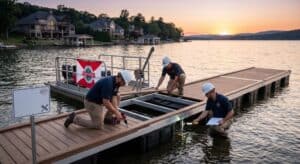
Environmental Rules Can Affect Materials and Placement
Wetlands, fish habitat, aquatic vegetation, erosion zones, and protected shoreline areas can all influence dock approval. Regulators may restrict dredging, piling locations, treated lumber, or work performed during certain seasons. Aluminum docks can fit well in regulated waterfront settings because they are durable and can be designed with fewer decay-related maintenance issues, but material choice does not replace proper review. Competent contractors can help match the structure to the site while respecting rules tied to water quality, habitat protection, and shoreline disturbance.
Anchoring Systems Often Face Their Own Requirements
Floating structures still need a dependable way to stay in position. Municipal codes may address piles, cables, stiff arms, anchors, or attachment points based on water depth, current, ice, and expected wave action. Poorly selected anchoring can create movement that damages the dock or allows it to drift into neighboring space.
Engineering requirements may also apply to larger systems or locations exposed to stronger environmental loads. Builders who understand those standards can choose hardware and connection methods that suit both the site and the permit conditions. Buyers comparing aluminum boat docks for sale should look beyond deck size and appearance because an approved anchoring design may be just as important as the dock frame itself. Proper placement also keeps access routes usable as water levels rise, fall, or shift through the boating season.
Electrical Work Around Water Has Stricter Safety Rules
Boat lifts, lighting, outlets, chargers, and shore-power connections bring electrical codes into the project. Water increases the risk of electric shock, so local requirements often call for specific grounding, bonding, disconnects, and ground-fault protection. Established floating dock builders typically coordinate with licensed electricians when electrical systems form part of the installation. Coordination helps keep the dock layout, conduit routes, equipment placement, and service access consistent with inspection requirements. Electrical changes made after construction can become expensive if finished decking or structural sections must be opened again.
Accessibility and Safety Standards Can Influence Design
Public, commercial, and shared-use docks may need to meet additional accessibility or safety rules. Gangway slopes, handrails, edge protection, walking clearances, fire access, and emergency equipment can all become part of the approval process. Private docks may face local standards for guardrails, ladders, lighting, or slip spacing depending on the jurisdiction.
Design details become harder to correct once fabrication is complete. Wider walkways, longer gangways, or different connection points may require changes to the frame and flotation system. Reputable dock professionals account for those factors early so compliance does not become an afterthought. Their familiarity with aluminum construction also helps them make adjustments without adding unnecessary weight or weakening the intended layout.
Inspection Problems Can Cost More Than Hiring the Right Builder
Failed inspections can lead to stop-work orders, permit delays, removal demands, or added fees. Waterfront owners may also face extra labor if a dock must be moved, shortened, rewired, or re-anchored after installation. Using a certified builder reduces that risk because the contractor can document materials, dimensions, attachment methods, and other details inspectors may ask to verify. Flotation Systems designs and manufactures all-aluminum boat dock systems and marine decking for residential and commercial waterfront properties. Their offerings include customizable floating and stationary docks, specialized low-maintenance aluminum decking, and various marine accessories engineered for long-term durability and weather resistance.
