

Table of Contents
- Emerging Career Pathways in Health Science
- Essential Skills for Future Healthcare Professionals
- Technological Advancements Shaping Healthcare Careers
- Educational Pathways to Health Science Careers
- Importance of Interdisciplinary Collaboration
- Cultural Competence and Empathy in Healthcare
- Systems Thinking in Health Science
- Conclusion
The rapidly evolving landscape of health science is creating exciting prospects for those eager to shape the future of healthcare. From leveraging advanced technology to addressing diverse patient needs, this sector offers dynamic roles for skilled and adaptable professionals. For students and career changers alike, gaining the right qualifications—such as a health science bachelor degree online—opens doors to a vast array of medical, administrative, and research-based positions.
Grasping the expanding range of health science career pathways, as well as the essential skills needed to thrive, is crucial for long-term success. As the healthcare industry continues to integrate new technologies and approaches, future professionals must cultivate both technical expertise and interpersonal skills to deliver high-quality care and innovate patient outcomes.
Emerging Career Pathways in Health Science
As healthcare transforms to meet both technological and demographic challenges, numerous roles are gaining prominence. Health informatics specialists, telehealth coordinators, precision medicine experts, and genetic counselors now hold central importance within care teams. For example, digital health specialists are needed to bridge patient care with the development and secure management of medical data. At the same time, telemedicine professionals facilitate remote diagnosis and treatment, removing barriers to access.
The rise of personalized medicine—tailoring care to individual genetic profiles—and an increased focus on preventive health are also reshaping career options. These positions require not only clinical knowledge but also technical savvy, analytical thinking, and the ability to work with large volumes of health information.
Essential Skills for Future Healthcare Professionals
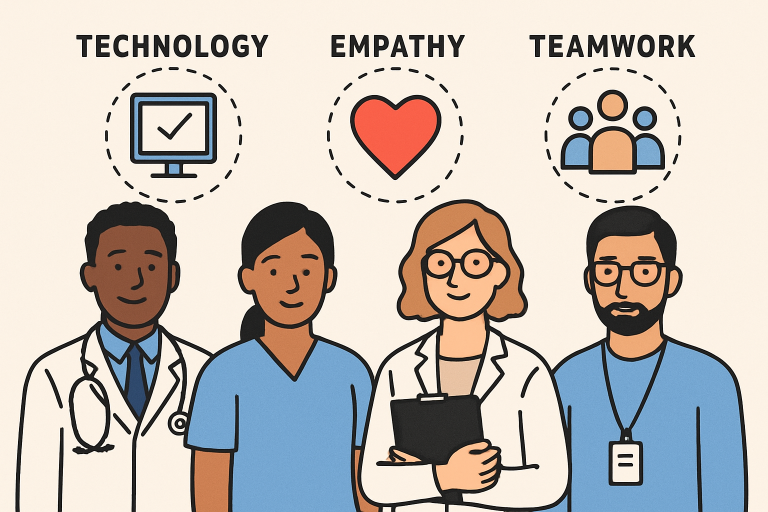
Tomorrow’s healthcare workforce will benefit from a blend of hard and soft skills. Employers increasingly seek candidates with:
- Technological Proficiency: Comfort with digital health tools, electronic health records, and health data systems.
- Critical Thinking: The ability to evaluate complex medical situations and devise effective solutions.
- Effective Communication: Skill in relaying crucial information to patients and collaborating within diverse care teams.
- Adaptability: Willingness to learn new practices and embrace ongoing change as innovations emerge.
- Empathy and Cultural Awareness: Sensitivity to patient backgrounds and a compassionate approach to care.
In addition to mastering these competencies, future professionals must also prioritize lifelong learning to stay abreast of regulatory changes, new research, and medical advancements. Articles from reputable sources, such as the American Medical Association, consistently emphasize the importance of ongoing professional development in all healthcare roles.
Technological Advancements Shaping Healthcare Careers
Innovations such as artificial intelligence (AI), machine learning, and advanced diagnostics are revolutionizing the way healthcare is delivered. AI-powered tools can now assist radiologists by identifying patterns within imaging data that may go undetected by the human eye. Similarly, wearable health technology and remote monitoring devices enable clinicians to track patient health, identify risks in real-time, and deliver timely interventions.
Digital health ecosystems—including mobile health apps, robotic surgery, and blockchain security—will require all health professionals to be digitally literate and comfortable adopting new tools. According to Forbes, proactive upskilling in these areas is increasingly important for anyone entering or advancing within the medical field.
Educational Pathways to Health Science Careers
Pursuing a formal education, such as a Bachelor of Science in Health Science from Northern Kentucky University, provides a solid foundation for roles throughout the industry—from clinical care to data management and public health. Flexible learning formats, such as online degree options, enable students and working adults to build essential knowledge in anatomy, physiology, and healthcare policy, while also developing ethical frameworks for practice.
Additional certifications and postgraduate education can further specialize a professional’s expertise in areas such as public health administration, biomedical research, or health information technology. The need for multidisciplinary skills means that programs increasingly include electives in business, technology, and behavioral science.
Importance of Interdisciplinary Collaboration
High-functioning healthcare systems are founded upon effective teamwork across specialties. Interdisciplinary collaboration enhances patient outcomes by combining the unique strengths of physicians, nurses, therapists, pharmacists, social workers, engineers, and IT professionals. As patient needs grow more complex, interdisciplinary care ensures better coordination, reduced errors, and innovative problem-solving.
To cultivate collaboration, educational and workplace environments must prioritize joint training and the development of communication skills. Acknowledging and respecting different expertise fosters a culture of mutual support and patient-focused care.
Cultural Competence and Empathy in Healthcare
As patient populations diversify, a strong emphasis on cultural competence becomes essential. Healthcare professionals need to understand, respect, and respond to varied beliefs, values, and languages. Empathy is equally vital, enabling providers to see situations from the patient’s perspective, build trust, and improve adherence to treatment plans. Empathic care leads to better health outcomes and greater patient satisfaction.
Ongoing cultural competence training is being integrated into medical education and certification, as discussed in resources from the American Medical Association, to promote more equitable care delivery across all patient groups.
Systems Thinking in Health Science
Healthcare operates as an interconnected system—where policy, technology, social factors, and care delivery all influence patient outcomes. Systems thinking equips professionals to track the downstream effects of decisions and understand patterns within large, complex networks. This holistic perspective supports more strategic, sustainable improvements in care quality, population health, and organizational efficiency.
By adopting systems thinking, future health science leaders can design solutions that anticipate side effects, minimize unintended consequences, and align with broader public health initiatives.
Conclusion
The future of health science is rich with opportunity for those prepared to embrace change. As technology advances, medicine and patient needs evolve, essential skills such as adaptability, collaboration, empathy, and continuous learning become crucial to a successful career. Investing in a robust educational path and remaining open to lifelong development will prepare aspiring professionals to play meaningful roles in shaping the next generation of healthcare.
