

Pain is not always the result of an injury. Very often, it develops from overload, long-term tension, a sedentary lifestyle, and a lack of conscious movement. In such cases, traditional exercises may be insufficient, and sometimes they can even intensify the problem. For this reason, more and more specialists—physiotherapists, doctors, and movement therapists—are turning to methods that not only strengthen the body but, above all, teach it how to move without pain. One of these methods is reformer Pilates.
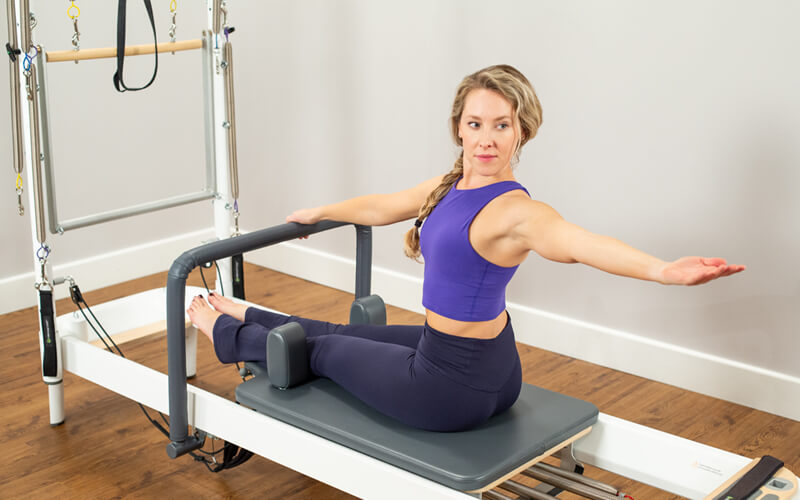
The reformer is not an ordinary piece of fitness equipment. It is a therapeutic tool that allows for precise load management, support of weakened structures, and restoration of natural movement patterns. Thanks to its springs, rails, and stable construction, exercises can be performed in a controlled, safe, and individually tailored manner. This is why reformer Pilates is increasingly used in rehabilitation and pain prevention.
What Distinguishes Reformer Pilates?
Reformer Pilates clearly differs from classic mat exercises or strength training because its foundation is not intensity or the number of repetitions, but rather the quality and precision of movement. Each exercise is performed at a controlled pace, with full stabilization and conscious synchronization with breathing, allowing the activation of deep muscles responsible for spinal and joint safety.
The reformer’s springs do not function like traditional weights. Instead, they create elastic resistance that can be precisely adjusted to the individual’s abilities. As a result, the body strengthens evenly, without sudden overload, and without forcing unnatural ranges of motion.
This specificity makes the reformer an exceptionally safe and versatile tool. It enables exercise for people with spinal pain, those after surgeries or injuries, or individuals with chronic conditions who often cannot engage in traditional forms of physical activity. Movement guided along defined pathways reduces the risk of compensation and reinforcement of incorrect movement patterns, while allowing for the gradual rebuilding of strength and mobility. The body learns to work in harmony, with appropriate muscle tone, fluidity, and awareness, which translates into a greater sense of safety in movement and a lower risk of pain recurrence.
Reformer Pilates in Rehabilitation
In rehabilitation, safety and an individualized approach are essential. The reformer meets these needs perfectly, as it allows for the gradual introduction of movement—from very gentle mobilizing exercises to more advanced strengthening work. The patient does not need to bear their own body weight in painful positions, and the therapist maintains full control over the range of motion.
Reformer Pilates is particularly effective in the rehabilitation of:
- spinal pain (lumbar, thoracic, and cervical),
- shoulder and shoulder girdle dysfunctions,
- hip and knee problems,
- overload resulting from sedentary work,
- return to function after sports injuries.
The exercises strengthen the deep stabilizing muscles responsible for spinal and joint stability. These muscles are often weakened after injury or prolonged immobilization. Thanks to the reformer, they can be activated without provoking pain, which significantly accelerates the rehabilitation process.
Pain Prevention – Why Is It Worth Starting Early?
Pain rarely appears suddenly. Most often, it is the result of long-term neglect, such as poor posture, lack of movement, stress, and muscle tension. Reformer Pilates works extremely well as a form of pain prevention because it addresses the causes, not just the symptoms.
Regular practice:
- improves posture,
- increases joint mobility,
- teaches conscious use of the body in everyday activities.
People who practice on the reformer often notice that:
- tension in the neck and shoulders decreases,
- the back feels less stiff after a full day of work,
- balance and coordination improve,
- movement becomes lighter and more natural.
This is especially important for office workers, drivers, teachers, as well as athletes who want to prevent injuries and overload.
The Role of Breathing and the Nervous System
One of the key elements of reformer Pilates is breathing. It is not an addition to the exercises, but an integral part of them. Proper breathing affects diaphragm function, spinal stabilization, and regulation of muscle tension. In rehabilitation, this is of great importance, as many pain conditions are linked to chronic stress and excessive nervous system tension.
Reformer exercises help activate the parasympathetic nervous system, which is responsible for relaxation and regeneration. As a result, the body not only becomes stronger but also learns to relax, which is crucial in chronic pain therapy. Many patients notice improved sleep quality, a greater sense of calm, and better concentration after just a few weeks of regular sessions.
Reformer Pilates and Classical Physiotherapy
Reformer Pilates is neither an alternative nor a competitor to classical physiotherapy—it is its natural and logical complement. In practice, it often serves as the next stage of rehabilitation, once pain has been managed, but the body still needs to learn proper movement, stabilization, and control. While manual physiotherapy focuses on restoring range of motion, reducing pain, and working with tissues, reformer training allows these effects to be safely transferred into active movement. Thanks to the adjustable spring resistance, the load can be precisely dosed, ensuring exercises are adapted to the patient’s current abilities, without the risk of overload or compensation.
A key difference is the active role of the patient in the healing process. Exercising on the reformer, the individual does not simply perform movements but learns to understand them—feeling which muscles are working, where tension appears, and how to regulate it. This awareness makes the effects of therapy more durable and resistant to pain recurrence. The patient leaves not only with a sense of relief, but with a new skill: the ability to sit, walk, lift, and respond better to the signals sent by the body. In the long term, this leads to healthier movement habits, greater confidence in daily functioning, and a real improvement in quality of life.
Who Is Reformer Pilates the Best Choice For?
Reformer Pilates is suitable for a very broad group of people, including:
- patients during or after rehabilitation,
- individuals with spinal and joint pain,
- women after pregnancy,
- seniors seeking a safe form of movement,
- athletes as complementary training,
- people who are mentally and physically stressed or overloaded.
The key is an individualized approach and sessions led by a qualified instructor or physiotherapist, who selects exercises, monitors technique, and ensures safety.
Movement That Truly Supports Health
Reformer Pilates is more than exercise. It is a form of movement-based therapy that combines knowledge of anatomy, biomechanics, and nervous system function. Through this approach, movement ceases to be a source of pain and becomes a tool for healing and prevention.
In a world where more and more people struggle with back pain, tension, and limited mobility, the reformer offers something invaluable—safe, conscious, and effective movement. Movement that does not overload, but supports. Movement that not only strengthens the body, but restores balance. Movement that truly heals.
This post was created in collaboration with balanced-body.ee
